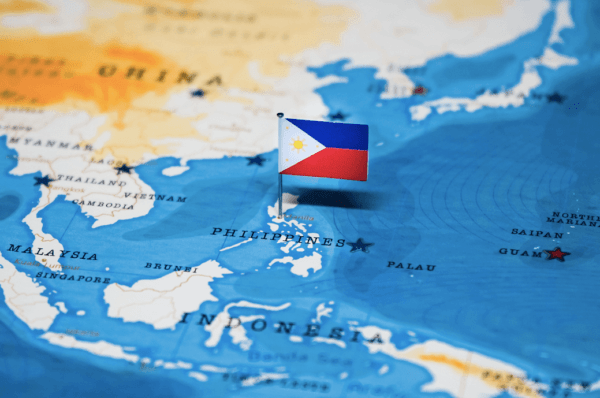
Each country is distinct from the rest of the world, but what is it about the Philippines that sets it apart from the rest? For one thing, it is the culture of the Philippines.
The Philippines is well-known not only for its beautiful islands, but also for its Filipino culture and values, which deserve to be shared with the rest of the world.
Here’s everything you need to know about the Philippines
- Language
- Food
- Culture
- Values
- Music, Arts and Literature
- Religion
- Clothing
- Celebrations
Language
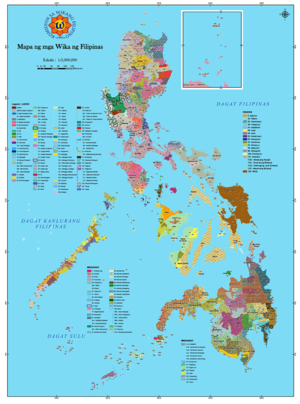
There are about 76 to 78 major language groups, with more than 500 dialects in the Philippines.
Almost all are Malayo-Polynesian languages native to the archipelago. In some communities, a number of Spanish-influenced creole varieties known as Chavacano are also spoken. Filipino, a standardized version of Tagalog, is designated as the national language and an official language alongside English in the 1987 constitution. The Filipino language is governed by the Komisyon sa Wikang Filipino and is used as a lingua franca by Filipinos of various ethnolinguistic backgrounds.
Tagalog and Cebuano are the most widely spoken native languages in the Philippines, accounting for roughly half of the population. Despite the fact that there are nearly as many native Cebuano speakers as Tagalog speakers, only Tagalog and English are official languages and are taught in schools. This has resulted in a rivalry between the two language groups, among other things.
Food
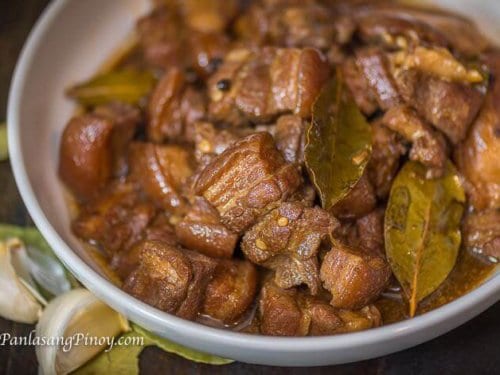
The food culture in the Philippines differs greatly from that of the West. If you’re a foodie, you’ll be delighted by the food culture in the Philippines because there are so many foods to try, both original and adapted from other countries. The best way to experience Filipino food culture is to be adventurous (with caution) when it comes to dishes.
Some Filipino food you must try
- Adobo
- Sinigang na baboy
- Lechon
- Sisig
- Balut
- Isaw
- Halo-halo
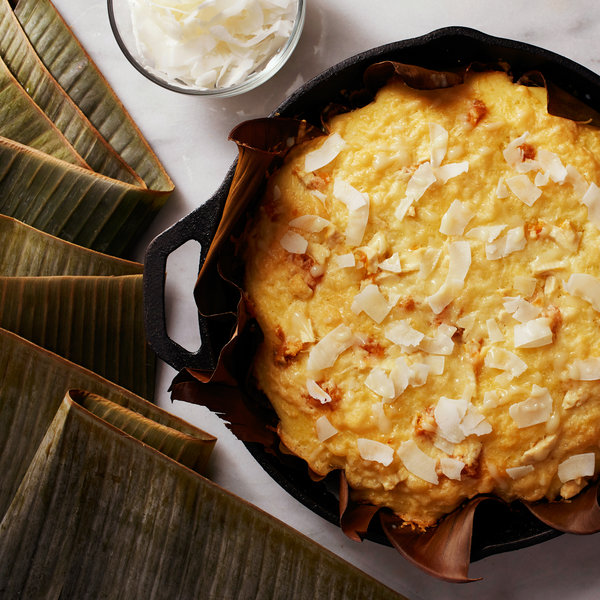
- Bibingka
- Puto bumbong
- Sorbetes
Filipino Culture
The Filipino culture has been influenced by various previous colonizations, primarily the cultures of Spain and America. It is easy to notice in the Philippines, from the architecture to the cultural beliefs. Despite these foreign influences, the old Asian Filipino culture has been preserved and can be seen in their way of life, cultural beliefs in the Philippines, and Filipino customs and traditions. Wherever you go, Filipino culture and values are very visible, and they have been widely appreciated and even applauded in many parts of the world.
Filipino Values
The set of values that the majority of Filipinos have historically held dear in their lives. This Philippine values system consists of a distinct set of consistent ideologies, moral codes, ethical practices, etiquette, and cultural and personal values that are promoted by their society. However, as in any society, the values that an individual holds sacred can vary depending on religion, upbringing, and other factors.
In general, Filipinos’ distinct value system is rooted primarily in personal alliance systems, particularly those based on kinship, obligation, friendship, religion (particularly Christianity), and commercial relationships.
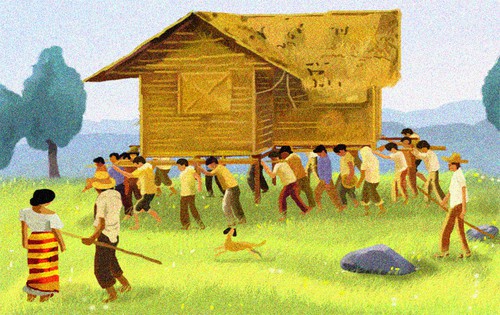
Some Filipino values are as follows:
- Family orientation
- Bayanihan Filipino culture
- Pagmamano
- Religious adherence
- Before, the Filipino men used to serenade a woman he was courting.
- Pakikisama
- Filipinos call their older siblings “ate” for older sisters and “kuya” for older brothers to show respect.
Music, Arts and Literature
Music, the arts, and literature all play important roles in Philippine culture. When it comes to music, they usually use raw materials to create a sound. This is just one of many indigenous practices found in the Philippines.
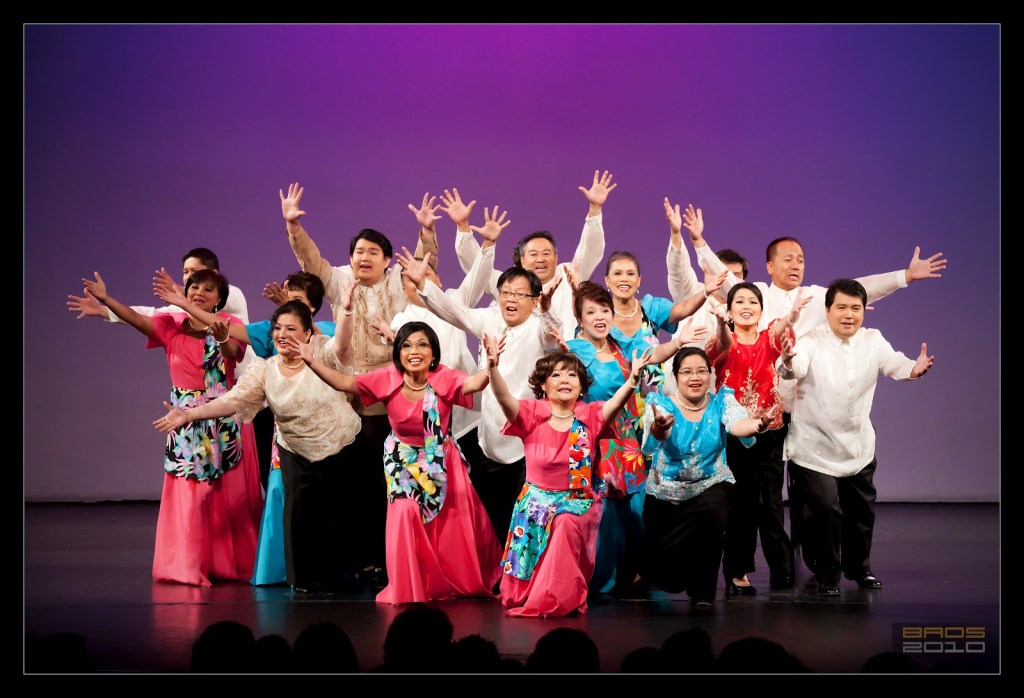
Filipinos appreciate folklore, which was influenced by the early church and Spanish literature. Myths are well-known in Filipino culture, particularly in the provinces. And the Filipino culture never fails to impress when it comes to literature.
Religion
We cannot deny that religion has played a significant role in shaping not only Philippine culture but also other cultures. Spain’s lasting legacy is Catholicism, which accounts for roughly 80% of the population. About 15% of the population is Muslim, and they can be found on Mindanao. With the arrival of Ferdinand Magellan in 1521, Christianity was introduced as early as the 16th century. The first Presbyterian and Methodist missionaries arrived with American soldiers in 1899 and introduced Protestantism. The remaining population is made up primarily of smaller Christian denominations and Buddhists.
Clothing
The Filipino national costume is vibrant, ornate, and stunning. For centuries, the Filipino people were subject to the occupation of other countries. As a result, their national attire was influenced by various cultures and incorporated some of their characteristics.
Climate, cultural traditions, foreign conquerors, and way of life are the main factors that shaped this country’s traditional clothing.
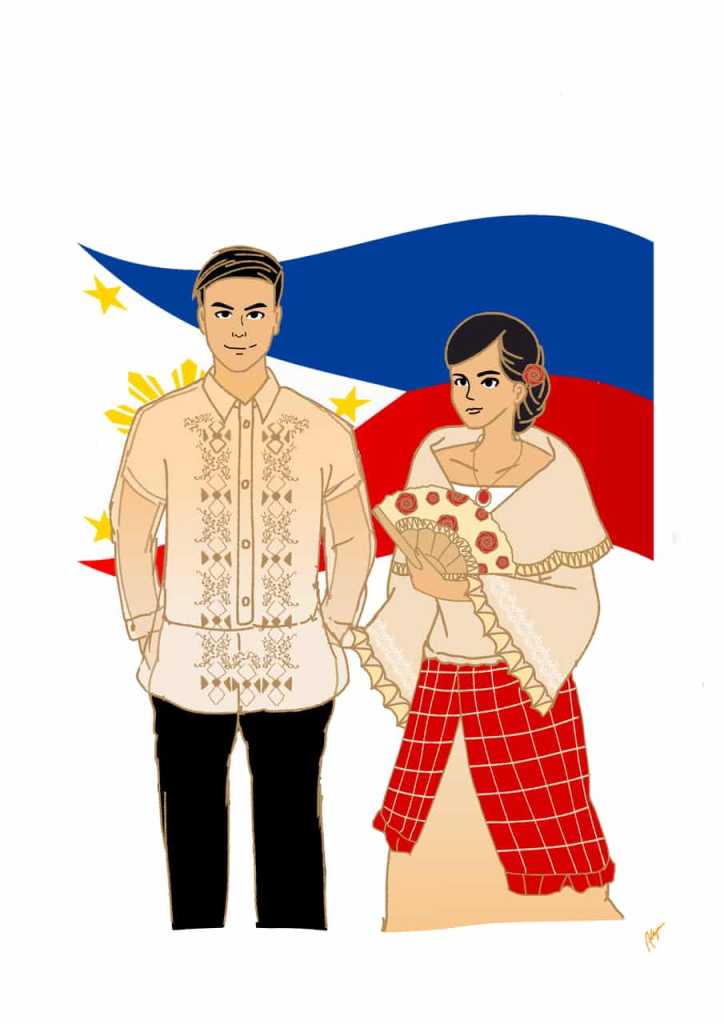
Barong Tagalog is a clothing worn by men. Having originated in Luzon, this clothing is may be made of pineapple fiber and is translucent, where an undershirt has to be worn together with dark pants.
Baro’t Saya (literally “Shirt and Skirt”) is the Filipino style of women’s clothing. Traditionally, it is composed of a blouse and a long skirt with a “panuelo”. It evolved many variants, some are regional. The upper-class women wore more elaborate baro’t saya sewn with beads and colorful designs. The skirt is also wider than what lower classes wore.
Celebrations
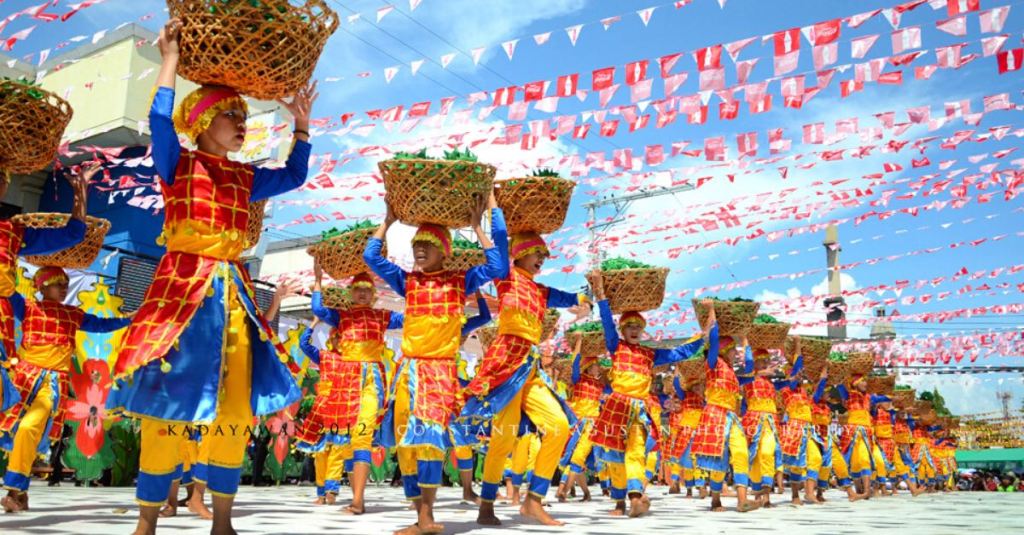
The majority of Filipino festivals, known as “fiestas,” may have their own peryas (trade fairs with temporary amusement parks). Most early fiestas have their roots in Christianity, dating back to the Spanish colonial period, when each of the many communities (such as barrios and towns) in the predominantly Catholic Philippines had a patron saint assigned to them. Early patronal festivals, which were encouraged by the Spanish to coincide with Christian holy days, became important tools in spreading Christianity throughout the country.
In the Philippines, festivals can be religious, cultural, or both. Several of these events are held to honor the local Roman Catholic patron saint, to commemorate local history and culture, to promote local products, or to celebrate a bountiful harvest.They can be marked by Holy Masses, processions, parades, theatrical plays and reenactments, religious or cultural rituals, trade fairs, exhibits, concerts, pageants, and various games and contests. However, the country’s festivals are not limited to Christian origins. Many festivals also emphasize Islamic or indigenous concepts. In the Philippines, there are over 42,000 known major and minor festivals, the majority of which are at the barangay (village) level. The Philippines has traditionally been known as the Capital of the World’s Festivities due to the country’s thousands of town, city, provincial, national, and village fiestas.
Some festivals, such as Holy Week and Christmas, are declared public holidays and are thus observed and celebrated across the country.
There are many places throughout the country where you can immerse yourself in authentic Filipino culture and tradition. And the Philippines' culture is undeniably one of the most notable in the world.
Ps. I do not own the pictures in this site
 platakylaquency.website